The future of innovation hinges on skills-driven approaches that prioritize capability over credentials, paired with inclusive practices that tap diverse talent for breakthroughs. This ...
Designing innovation programs with dual impact outcomes balances commercial success and social good, creating scalable solutions that benefit businesses and communities alike. In the ...
Transforming innovation by valuing skills over credentials unleashes untapped talent, accelerates breakthroughs, and democratizes opportunity in America’s tech-driven economy. This shift—from rigid degrees to ...
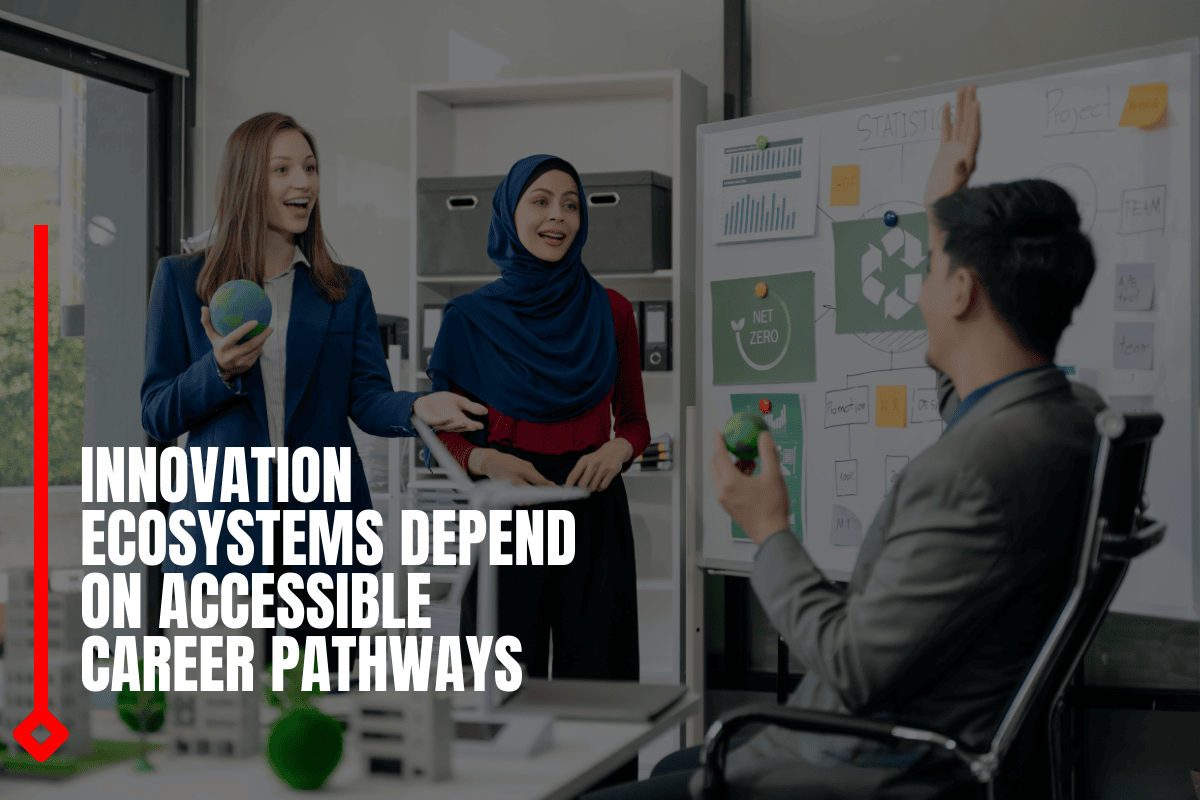
Innovation ecosystems thrive when accessible career pathways democratize entry into high-growth fields like tech, engineering, and AI, fueling diverse talent pools that drive creativity ...
Building innovation cultures through experiential learning models empowers US organizations to foster creativity, adaptability, and real-world problem-solving. These hands-on approaches shift from passive training ...
Inclusive innovation thrives when U.S. organizations design equitable workforces that harness diverse perspectives for breakthrough ideas and solutions. By prioritizing representation across gender, ethnicity, ...
Innovation thrives when diverse talent flows freely, unhindered by artificial barriers like outdated credentials or narrow hiring pipelines. Removing these obstacles unleashes creativity, accelerates ...
Access and exposure form the foundation for inclusive innovation pipelines, transforming diverse talent into impactful tech solutions that serve underserved communities. This approach ensures ...
Innovation in technology, business, and science demands breaking free from rigid career ladders that prioritize credentials over capabilities, fostering environments where diverse thinkers solve ...
Designing workforce systems for long-term innovation requires integrating talent mobility, continuous learning metrics, and agile structures that adapt to technological shifts. Organizations prioritizing internal ...