
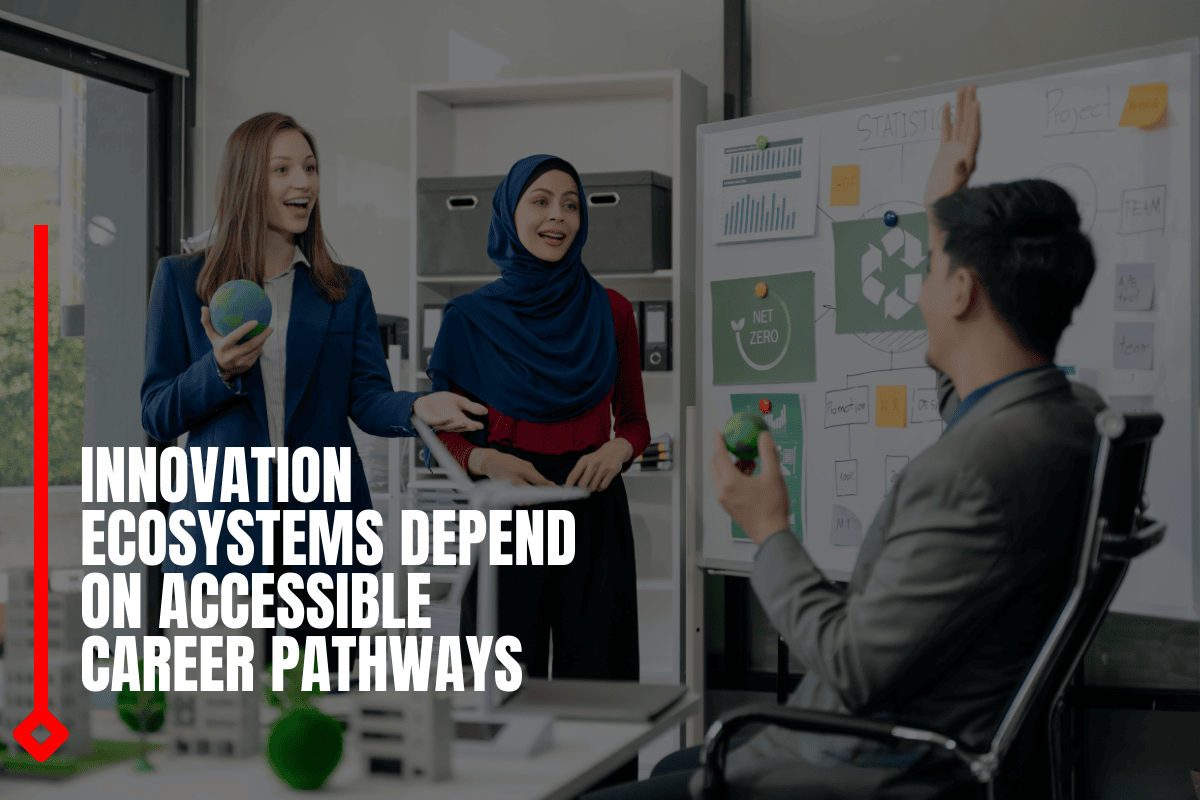
Innovation ecosystems thrive when accessible career pathways democratize entry into high-growth fields like tech, engineering, and AI, fueling diverse talent pools that drive creativity and problem-solving. By dismantling barriers—through apprenticeships, bootcamps, and inclusive hiring—US industries sustain momentum, turning untapped potential into breakthroughs that power economic growth.
Bridging the Skills Gap
Traditional four-year degrees exclude 60% of Americans without college access, yet innovation demands rapid upskilling. Career pathways like Google’s IT certificates or IBM’s apprenticeships compress learning into 6-12 months, yielding job-ready pros in cybersecurity or data analytics. These programs boast 75-90% placement rates, injecting fresh ideas into stagnant teams.

Community colleges partner with firms for stackable credentials—e.g., AWS Cloud Practitioner to Solutions Architect—allowing part-time workers to advance without debt.
Apprenticeships as Launchpads
Registered apprenticeships blend paid work with training, earning $50K+ year one in software dev or manufacturing. DOL’s 2026 expansion targets 1M spots, prioritizing underrepresented groups via outreach in rural/HBCU areas. Earn-while-learn models retain 80% post-completion, fostering loyalty and iterative innovation.
Tech giants like Microsoft convert 70% apprentices to full-time, where diverse cohorts challenge assumptions in product design.
Bootcamps and Alternative Routes

Coding bootcamps (General Assembly, Flatiron) deliver intensive 12-week immersions, placing 85% grads at salaries rivaling degrees ($70-100K). No-prereq entry via free prep courses widens nets; alumni networks amplify via mentorship, accelerating promotions.
Micro-credentials on Coursera/ edX validate niche skills (Rust programming, ethical AI), stackable toward portfolios that impress over pedigrees.
Inclusive Hiring Practices
Blind resume reviews strip names/schools; skills assessments (HackerRank) prioritize code over credentials. Returnships reboard career-breakers (parents, caregivers), boosting female retention 30%. H1-B expansions and J-1 internships import global talent, enriching perspectives.

DEIB metrics tie exec bonuses to pathway hires, ensuring diversity correlates with 35% higher innovation per McKinsey.
Mentorship and Networking Hubs
Ecosystems like Techstars accelerators pair startups with mentors, while LinkedIn Learning paths connect juniors to VPs. Hackathons (MLH events) prototype real solutions, landing jobs via demos. Regional hubs—Silicon Alley, Research Triangle—host career fairs blending trades with tech.
Youth programs (Girls Who Code, Code.org) seed pipelines early, narrowing gender gaps from 25% to teens’ 50/50 parity.
Policy and Funding Levers
IRA/CHIPS Act subsidies fund training ($50B+), mandating apprenticeships for grants. State tax credits incentivize bootcamp partnerships; Pell Grants for short-term programs expand access. Public-private consortia like CompTIA align curricula to job reqs, hitting 95% relevance.
ROI: every $1 pathway investment yields $7 economic return via filled roles and startups.
Measuring Ecosystem Health
Track via metrics: time-to-hire (<30 days), diversity ratios (40% underrepresented), patent filings per cohort. Vibrant pathways correlate with 20% faster product cycles; stagnant ones breed monopolies.
Success stories: Intel’s apprentices launch chips; Pathway alumni at Anduril build drones.
These pathways sustain ecosystems, turning bystanders into builders for enduring US leadership.
FAQs
Q. Why apprenticeships over degrees?
Paid training, 80% retention, rapid entry—no debt.
Q. Bootcamp placement rates?
85% at $70-100K; intensive, no-prereq paths.
Q. Inclusive hiring tactics?
Blind screens, skills tests, returnships—diversity boosts innovation 35%.
Q. Policy role?
IRA funds training; tax credits scale partnerships.
Q. Youth pipeline programs?
Girls Who Code, hackathons seed diverse talent early.


