
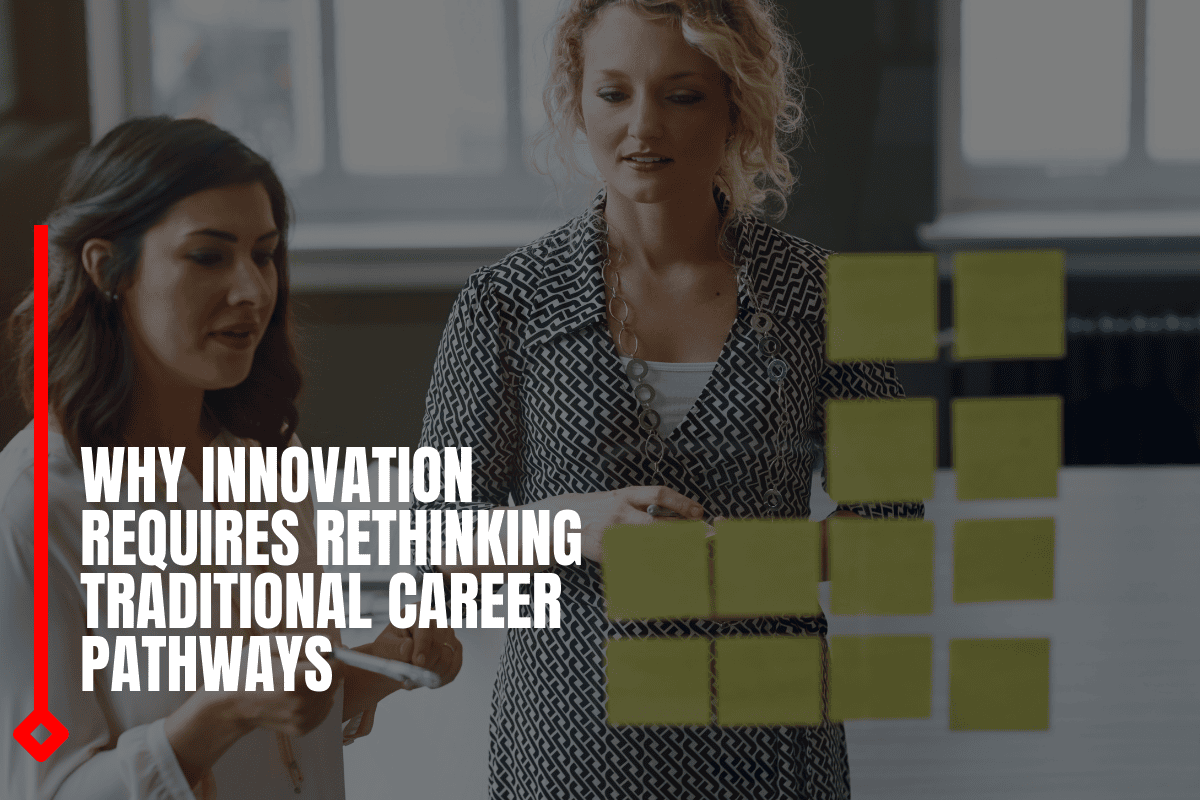
Innovation in technology, business, and science demands breaking free from rigid career ladders that prioritize credentials over capabilities, fostering environments where diverse thinkers solve complex problems faster.
Traditional pathways—four-year degrees followed by linear promotions—stifled creativity by rewarding conformity, but modern demands for AI integration, rapid prototyping, and cross-disciplinary collaboration require fluid skill-building and risk-taking.

US companies now embrace non-linear routes like bootcamps, apprenticeships, and internal rotations to fuel breakthroughs, expanding talent pools and accelerating product cycles.
Limitations of Conventional Ladders
University degrees and corporate hierarchies once guaranteed progression, but they filter out unconventional talent while delaying real-world exposure. Engineering grads spend years in theory before hands-on coding, missing iterative failure essential for innovation; meanwhile, self-taught developers launch apps via GitHub, iterating based on user feedback.
These paths also entrench biases, underrepresenting women and minorities who face barriers to elite schools or networks, limiting diverse perspectives needed for inclusive products like accessible AI tools.
Hierarchies discourage experimentation—mid-level managers fear demotion for failed pilots—while flat structures at firms like Google empower junior staff to pitch moonshots.
Skills Over Seniority
Innovation thrives on demonstrable abilities, not tenure. Tech giants shifted to skills-based hiring by 2026, using platforms to test AI prompt engineering or cloud deployment directly, bypassing HR gatekeepers. Portfolios showcasing deployed models or open-source contributions signal impact better than MBAs; bootcamp alumni now fill 30% of software roles, proving faster ramps to productivity.
This model supports lifelong learning—annual upskilling in GenAI or quantum basics keeps veterans relevant alongside fresh hires, creating hybrid teams blending deep domain knowledge with emerging tools.
Apprenticeships and Rotational Programs

Modern pathways mimic guild systems: paid apprenticeships immerse novices in live projects under mentors, building judgment through mentorship rather than lectures.
IBM and Siemens pair trainees with product teams for six months, yielding innovators who understand user pain points intimately. Rotational programs cycle talent through engineering, product, and sales, sparking hybrid thinkers who connect dots across silos—key for breakthroughs like Tesla’s integrated hardware-software ecosystem.
These compress decade-long climbs into 2-3 years, prioritizing output over time served.
Benefits for Organizations and Workers
Companies gain agility: diverse entrants challenge assumptions, boosting patent rates 20% in inclusive R&D teams. Workers access high-impact roles without debt—$15K bootcamps versus $200K degrees—while continuous pathways like micro-credentials ensure relevance amid 85 million jobs displaced by automation by 2030.
Failure-tolerant cultures celebrate pivots; employees prototype freely, knowing career arcs zigzag toward expertise.
Cultural Shifts Enabling Change
Leaders must dismantle degree mandates in job descriptions and fund internal academies. Metrics evolve from headcount to velocity—deployments per sprint or customer NPS—rewarding innovation over attendance. Storytelling amplifies successes: publicizing bootcamp hires’ launches normalizes new paths.
FAQs
Q. Why do degrees hinder innovation?
They emphasize theory over practice and filter diverse talent, delaying hands-on iteration.
Q. What replaces traditional ladders?
Apprenticeships, rotations, skills tests, and portfolios prioritize proven impact.
Q. How do companies measure success?
Via output metrics like prototypes shipped or user adoption, not years employed.
Q. Do non-linear paths risk skill gaps?
No—targeted training and mentorship accelerate mastery beyond siloed academics.
Q. What’s the ROI for rethinking pathways?
Wider talent pools, 20%+ innovation gains, and lower training costs via real projects.


