A new Pentagon Inspector General report has raised serious concerns about how the U.S. Army and Navy have been handling the academic qualifications of new recruits.
According to the watchdog, both services went beyond federal limits on low-scoring recruits by misreporting test scores sparking a fresh debate during a time when military recruitment is already facing serious challenges.
Prep Courses Helped Recruit Low-Scoring Applicants

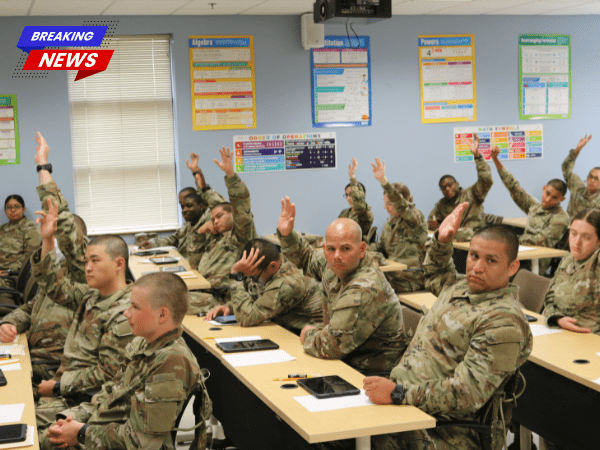
To cope with the ongoing recruiting crisis, the Army and Navy launched new “pre-boot camp” training programs in recent years known as the Future Soldier and Future Sailor Preparatory Courses. These courses aim to improve the academic and physical abilities of applicants who initially fall short of military entry standards.
By taking part in these programs, recruits with low Armed Forces Qualification Test (AFQT) scores or fitness issues are given time to prepare before officially joining boot camp.
What the Report Found
The Inspector General’s report, based on a yearlong review, claims that the Army and Navy misrepresented the actual qualifications of these recruits. Here’s how:
- Instead of using the recruits’ original AFQT scores (taken before the prep courses), the Army and Navy reported their improved scores (taken after completing the course).
- This allowed both services to exceed the legal limit of 4% for Category IV recruits—those scoring in the 10th to 30th percentile—without reporting it to the Secretary of Defense, as required by law.
- The Navy, for example, would have had over 11% of its 2025 recruits in Category IV if it used the initial scores. With the post-course scores, this number drops to about 7%.
- The Army also exceeded the 10% mark for low scorers, but the report didn’t mention the exact figure.

Federal law requires that any increase in the percentage of low-scoring recruits must be approved by the Secretary of Defense, who must also inform Congress.
Pentagon Pushes Back
The Department of Defense has disagreed with the report’s conclusions. In a memo, William Fitzhugh, Acting Assistant Secretary of Defense for Manpower and Reserve Affairs, stated that the whole point of the prep courses is to improve recruits’ academic skills.
He argued that it makes more sense to count the final scores, not the initial ones. “Improved academic skills… benefit both the recruits and the military,” he noted.
Why the Rules Matter

Category IV recruits are known to struggle more with training and job performance, according to the report. That’s why there’s a strict limit on how many can be admitted each year.
These limits are especially important as modern military roles like cyber security, intelligence, and advanced logistics require higher academic skills.
If too many low-scoring recruits are allowed in, it could affect the military’s ability to carry out complex missions that depend on well-trained and capable personnel.
A Tough Time for Recruitment
The report comes as both the Army and Navy are just starting to recover from a major recruitment crisis. In recent years, they have missed their recruitment goals by thousands of recruits.
Several factors are making recruitment more difficult:
- Around 75% of American youth do not meet the military’s basic fitness or academic standards.
- Fewer young people are considering military careers at all.
- English language barriers and relaxed testing rules were also flagged in earlier reports, especially in the Army’s prep programs.
These challenges have forced the military to get creative, but the watchdog warns that such efforts must still follow the rules.
While the military’s prep programs have helped thousands of struggling recruits get into shape both mentally and physically the new report reminds us that rules are there for a reason.
Transparency and accountability in reporting recruit qualifications are critical, especially during times of crisis. As the Army and Navy continue to explore new ways to bring in talent, balancing innovation with integrity will remain a key challenge.
FAQ
Q1: What did the Pentagon report say about the Army and Navy?
The report said both services misrepresented recruits’ test scores by using post-course results instead of initial scores, letting them bypass federal limits on low scorers.
Q2: What are Category IV recruits?
These are recruits who score in the 10th to 30th percentile on the AFQT, indicating below-average academic performance and trainability.
Q3: How did prep courses affect the scores?
The Future Soldier and Future Sailor programs helped low-scoring applicants improve their scores, but the services counted those improved scores instead of the original ones.
Q4: Is the Pentagon agreeing with the report?
No, the Pentagon argues that final, improved scores should count, as the whole point of the prep programs is to boost recruits’ abilities.
Q5: Why does this matter for military readiness?
Too many low-scoring recruits could weaken military performance in advanced roles that require high academic skills, which is why strict limits exist.