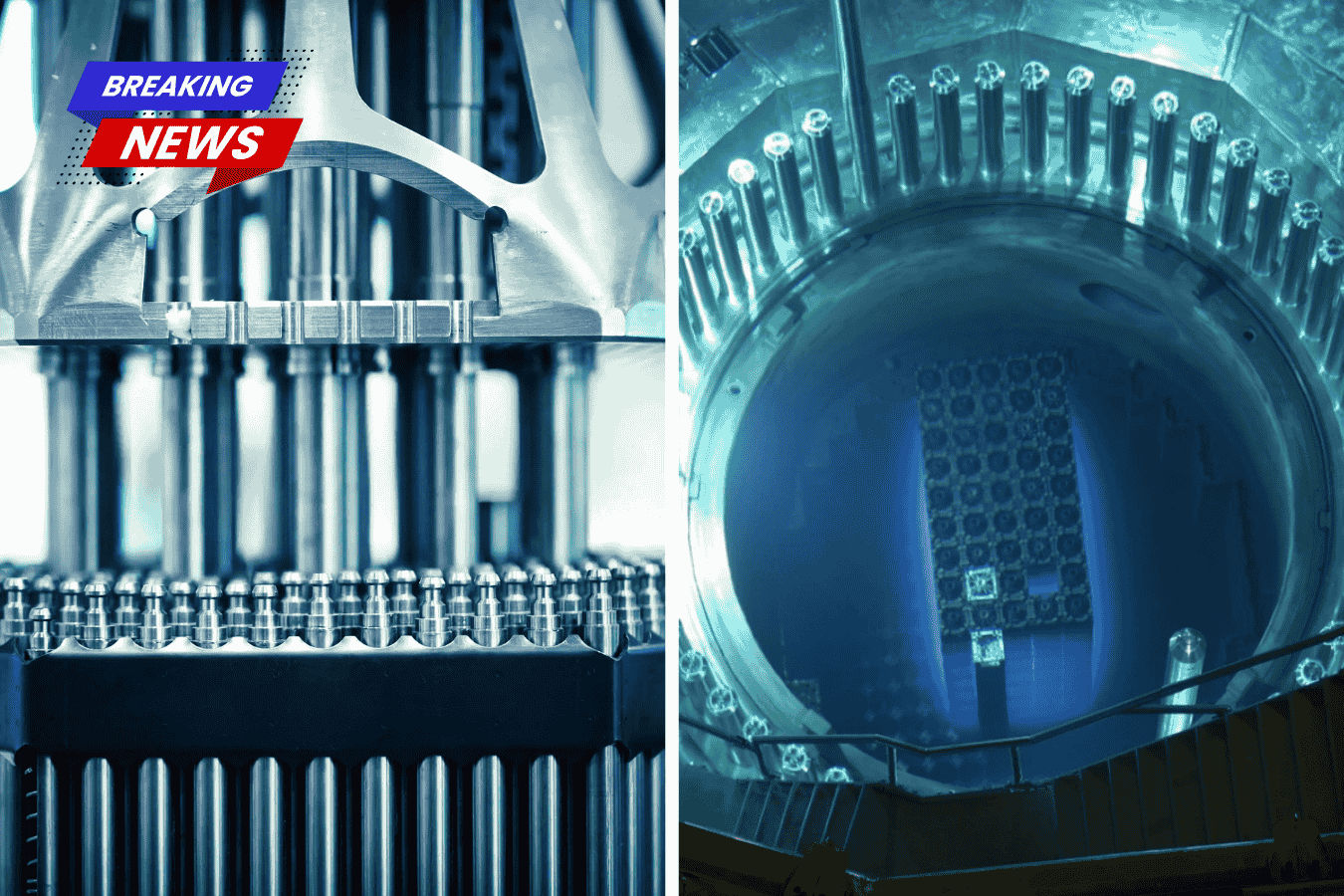
The nuclear industry is in the midst of a significant revival, with investors pouring substantial capital into startups focused on revolutionizing the sector. In the closing weeks of 2025 alone, nuclear startups raised an impressive $1.1 billion.
The surge in funding is largely fueled by the optimism that smaller, more efficient reactors could succeed where larger, traditional nuclear plants have faced setbacks in recent years.

Traditional nuclear reactors, such as the new Vogtle 3 and 4 reactors in Georgia, represent massive infrastructure projects. These reactors are enormous, with fuel assemblies that stretch 14 feet tall, and they can generate over 1 gigawatt of electricity each. However, these plants have been plagued by delays and budget overruns, with Vogtle’s reactors being eight years late and more than $20 billion over budget.
In response to these issues, a new generation of nuclear startups is betting on smaller reactors as a solution. By reducing the size of the reactors, these companies hope to avoid the high costs and lengthy timelines associated with large-scale nuclear projects.
Smaller reactors, they argue, can be mass-produced, enabling the industry to achieve economies of scale. As more reactors are built, the cost per unit should decrease, and companies can simply add more reactors to meet power demands.

While the benefits of scaling down nuclear reactors sound promising, experts remain cautious. The core challenge for these startups is mastering the manufacturing process, which, as history has shown, is far from simple.
Manufacturing Challenges: Lessons from Tesla
Manufacturing smaller reactors using mass production techniques is not without its challenges. Tesla, for example, faced significant difficulties in ramping up production of its Model 3 electric car, despite being in an industry with extensive U.S. manufacturing expertise.
Nuclear startups, however, do not have the same advantage in terms of domestic manufacturing knowledge. According to Milo Werner, a general partner at DCVC, a venture capital firm, the U.S. nuclear industry has lost much of the capability required to produce specialized materials necessary for reactor construction.

“We have to buy them overseas. We’ve forgotten how to make them,” Werner said, highlighting the deep manufacturing gaps that have developed in the U.S. over the decades of offshoring production.
Werner, who has a background in manufacturing from her work at Tesla and Fitbit, explained that every manufacturer faces two major challenges: capital and human capital. For nuclear startups, securing capital is less of a problem, as the industry is currently flush with funding. The bigger issue is the lack of experienced personnel, particularly in factory construction and operations.
“We haven’t really built any industrial facilities in 40 years in the United States,” Werner noted. As a result, the U.S. workforce lacks the “muscle memory” needed to successfully build and operate factories at scale.
A Workforce Gap
This human capital shortage extends beyond just factory workers, according to Werner. There is a lack of experienced supervisors, managers, and even financial experts who can handle the complexities of building and operating high-tech manufacturing plants. “We don’t have the quantum of people we need for everybody to have a full staff of seasoned manufacturing people,” she said.
However, there is a silver lining. Werner pointed out that many startups, both in the nuclear sector and other industries, are bringing their manufacturing closer to their technical teams. This “vertical integration” approach, where manufacturing is tightly coupled with R&D, can help accelerate the learning cycle, foster continuous improvement, and gradually rebuild U.S. manufacturing capabilities.
The Promise of Modularity and Scaling
For nuclear startups aiming to reap the benefits of mass manufacturing, a modular approach is essential. Rather than attempting to scale up production too quickly, startups are encouraged to start small, produce in manageable volumes, and learn from each production cycle. This method allows companies to gather critical data on their manufacturing processes and refine their techniques over time.
The modular approach also reduces the risks associated with scaling and allows companies to iterate quickly. “Really leaning into modularity is very important for investors,” said Werner. This approach not only helps reduce initial costs but also enables startups to showcase improvements in efficiency and cost-effectiveness over time, making them more attractive to investors.
However, Werner cautioned that the benefits of mass manufacturing will not materialize overnight. Companies often forecast cost reductions and efficiency gains from scaling, but these improvements can take longer to realize than initially anticipated. “Often it takes years, like a decade, to get there,” she explained.
The Road Ahead for Nuclear Startups
The nuclear industry’s shift toward smaller reactors holds the potential to significantly lower costs, improve efficiency, and make nuclear energy more competitive with other sources of power. While these startups have the advantage of cutting-edge technology and ample investor funding, they still face considerable hurdles in manufacturing and scaling their operations.
The success of the nuclear renaissance depends on whether these startups can overcome the manufacturing challenges ahead—specifically the shortage of experienced labor and the difficulty of mass-producing specialized components. If they can navigate these obstacles and realize the promise of modular, smaller reactors, they could play a pivotal role in reshaping the global energy landscape.
FAQs
Q. Why is the nuclear industry seeing a renaissance?
The nuclear industry is undergoing a revival due to a combination of factors, including investor optimism and technological advances. Smaller, modular reactors are seen as a way to reduce costs, avoid delays, and increase efficiency.
Q. What are the challenges faced by nuclear startups?
While funding is plentiful, nuclear startups face significant manufacturing challenges. The U.S. lacks the necessary human capital and manufacturing expertise to produce specialized components needed for reactors.
Q. How do smaller reactors differ from traditional nuclear reactors?
Smaller reactors are designed to be more modular and easier to mass-produce. Unlike traditional reactors, which are massive and costly to build, smaller reactors can be scaled by adding more units as needed, which may drive down costs.
Q. What is the role of modularity in nuclear startups?
Modularity allows startups to produce small volumes early on and refine their processes over time. This approach enables startups to scale up more efficiently and reduces the risks associated with large-scale production.
Q. How long will it take for nuclear startups to see cost reductions?
It often takes years, sometimes up to a decade, for manufacturers to achieve significant cost reductions through mass production. This is due to the time needed to refine processes and learn from early production cycles.