The mood inside virtual reality circles right now feels less like a boom and more like late winter—quiet, cautious, and a little anxious. Meta, the company that once bet its entire identity on VR and the metaverse, is pulling back.
Not abandoning the space outright, but clearly shifting its center of gravity toward artificial intelligence and smart glasses. And for an industry that grew up in Meta’s shadow, that change is rattling.

“I can see how it feels like a VR winter,” said Jessica Young, an independent VR content creator who builds experiences inside Horizon Worlds, Meta’s virtual social platform.
That chill intensified last week when Meta cut roughly 10% of staff inside its Reality Labs division, according to CNBC. About 1,000 roles were eliminated, with teams tied to Quest VR headsets and Horizon Worlds among the hardest hit. Several internal VR studios were shuttered altogether.
Meta said the layoffs are part of a broader effort to redirect spending away from traditional VR and toward AI and wearable devices, particularly its Ray-Ban Meta smart glasses, produced in partnership with EssilorLuxottica. Beyond that statement, the company declined further comment.
From Metaverse Obsession to Strategic Retrenchment

The shift is striking, given how central VR has been to Meta’s identity. The company spent $2 billion to acquire Oculus in 2014, a deal that effectively jump-started the modern consumer VR market. Six years later, Mark Zuckerberg renamed Facebook to Meta, tying the company’s future to immersive digital worlds and the metaverse concept.
That vision came with a steep price tag. Since late 2020, Reality Labs has racked up more than $70 billion in cumulative losses, according to Meta’s own disclosures. Wall Street tolerated those losses when growth stories were scarce and capital was cheap. In today’s environment, patience has thinned.
While Zuckerberg hasn’t publicly disavowed VR, the company’s product cadence tells a story. At its 2025 Connect conference, Meta largely skipped over new Quest headset announcements. Instead, it highlighted its $799 Ray-Ban Meta Display glasses, which feature a single built-in digital screen and deep AI integration.

“If Meta’s not putting out a new headset for another year or two, it’s going to feel stale,” Young said. “It already kind of does.”
Meta Says VR Isn’t Dead—Just Slower Than Expected
Meta executives are pushing back on the idea that the company is walking away.
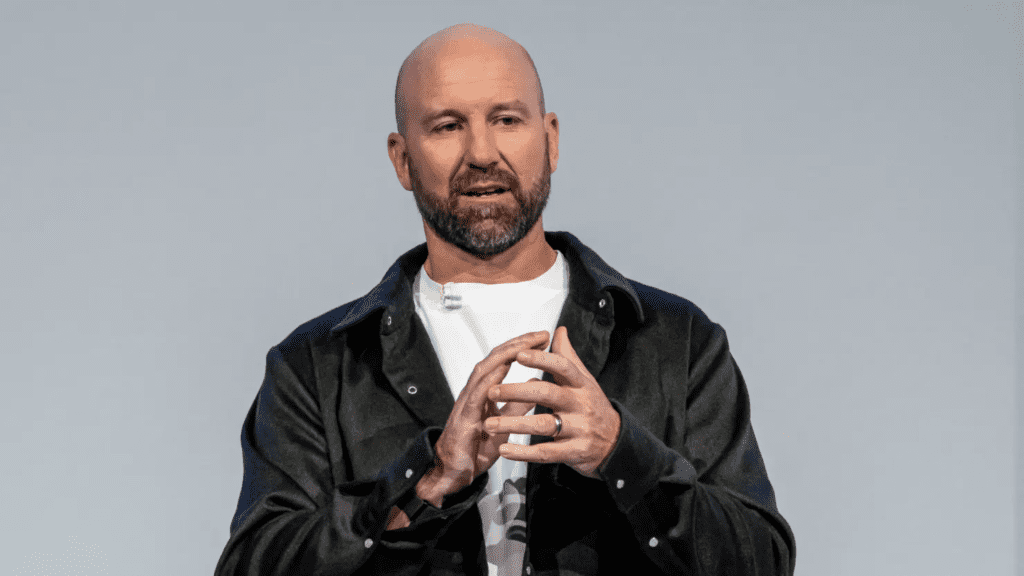
“We’re still continuing to invest heavily in this space, but obviously, VR is growing less quickly than we hoped,” Meta CTO Andrew Bosworth said in an interview with the tech newsletter Sources. “You want to make sure that your investment is right-sized.”
Bosworth also shared a post from Oculus co-founder Palmer Luckey, who noted that Meta still employs the largest VR-focused workforce in the industry “by about an order of magnitude.” Luckey acknowledged the pain of layoffs but argued the changes could ultimately be healthy for VR’s long-term sustainability.
That reassurance hasn’t fully calmed developers who depend on Meta’s ecosystem to make a living.
The Market Data Is Brutal for VR
Industry data suggests Meta isn’t acting in a vacuum.
According to IDC, the broader Extended Reality (XR) category—which includes VR, mixed reality, and AI-powered smart glasses—is expected to grow 41.6% year over year in 2025, reaching 14.5 million units shipped. But almost all of that growth is coming from smart glasses.
Shipments of VR and mixed-reality headsets are projected to drop 42.8% to just 3.9 million units in 2025. Meanwhile, AI-enabled glasses, with and without displays, are forecast to surge 211.2% to 10.6 million units.
XR Device Outlook for 2025 (IDC)
| Category | 2025 Shipments | YoY Growth |
|---|---|---|
| VR & Mixed Reality Headsets | 3.9 million | -42.8% |
| AI & Smart Glasses | 10.6 million | +211.2% |
| Total XR Devices | 14.5 million | +41.6% |
Jitesh Ubrani, a research manager at IDC, described the VR headset market as niche, primarily appealing to dedicated gamers and enthusiasts.
“The market has spoken,” Ubrani said. “Average consumers don’t want to wear big, bulky headsets for long sessions.”
Was VR Ever Meant to Be the Next iPhone?
Andrew Eiche, CEO of Google-owned VR studio Owlchemy Labs, says the industry made a strategic error by framing VR as a smartphone-style platform shift.
“It was always misguided to think VR was on the cusp of a smartphone moment,” Eiche said. “That comparison set unrealistic expectations.”
Instead, he likens VR’s trajectory to early video game consoles like Atari—popular with a passionate audience, then followed by a crash before finding a more sustainable role later. The infamous 1983 video game market collapse didn’t kill gaming; it reshaped it.
“A lot of tech people thought VR was going to be instantly amazing, and the same thing’s happening with AI,” Eiche said. “When you’re looking at long-term technologies, VR is not going anywhere.”

Developers Feel the Pullback Immediately
Even if VR survives, Meta’s pullback has immediate consequences. Quest headsets dominate the consumer VR market, and Meta’s app store is the primary distribution channel for third-party developers.
“We’re at the mercy of Meta,” Eiche said. “It creates a situation where if Meta pulls back, we all pull back.”
Several VR studios have downsized recently, part of a broader slump in the video game industry. Developers also say Meta’s heavy push for Horizon Worlds crowded out independent creators struggling for visibility.
Apple and Others Haven’t Saved Consumer VR
Apple’s long-awaited entry into spatial computing with the $3,499 Vision Pro headset in February 2024 was supposed to validate the category. Instead, it underscored VR’s limitations.
IDC reported in January that Luxshare, Apple’s Chinese manufacturing partner, halted production of new Vision Pro units, signaling weak consumer demand. While Apple has found some traction with developers and enterprise customers, sales volumes remain modest.
“Apple did do well selling to developers and some very big companies,” Ubrani said. “But it hasn’t moved the mass market.”
Other entrants, including Samsung’s Galaxy XR and Valve’s upcoming Steam Frame wireless headset, could help stabilize the ecosystem, but none appear poised to ignite mass adoption overnight.
Enterprise VR: Less Glamour, More ROI
If consumer VR is cooling, enterprise use cases are quietly warming.
IDC says business adoption of VR is growing slowly but steadily, driven by training, design, simulation, and collaboration tools that can deliver measurable returns.
“There were certain quarters where Apple beat Meta in enterprise,” Ubrani said, citing Apple’s long-standing relationships with corporate buyers.
Ironically, Meta is stepping back here too. As part of its Reality Labs cuts, the company announced it would end Horizon managed services, a program designed for businesses using Quest headsets for internal training.
Sean Mann, CEO of startup RP1, believes Meta missed an opportunity by focusing too narrowly on gaming and social VR.
“They failed to see how big VR could be outside of gaming,” Mann said.
Horizon Worlds: From Pandemic Lifeline to Identity Crisis
Despite everything, creators like Young aren’t walking away.
During the pandemic, Horizon Worlds became a social lifeline for people isolated by geography, disability, or circumstance. It lowered the barrier to creation, allowing users with no coding or art background to build virtual spaces.
Young earns income by producing trailers for Horizon developers and has won Meta-sponsored competitions. Still, she’s skeptical of Horizon’s shift toward a mobile-first experience modeled after platforms like Roblox.
“There was something special about Horizon when it was VR-first,” she said. “What’s frustrating is watching people declare it dead without ever understanding what it was.”
The Bigger Picture
Meta’s retreat doesn’t mean VR is finished. It does mean the industry is entering a more sober phase—one driven by realistic adoption curves instead of moonshot narratives. AI-powered glasses are having their moment, and capital is following attention.
VR may endure as a specialized tool for gaming, enterprise, and social niches rather than the next universal computing platform. For developers and creators, that future is less glamorous—but possibly more honest.
The winter analogy fits. Not an ending. Just a season change.
FAQs
Q. Is Meta abandoning virtual reality completely?
No. Meta says it is continuing to invest in VR, but at a slower pace and with more focus on AI and wearables.
Q. Why is Meta prioritizing smart glasses over VR?
Market data shows far stronger growth and consumer interest in AI-powered glasses compared to bulky VR headsets.
Q. Are VR headsets sales declining?
Yes. IDC projects VR and mixed-reality headset shipments will fall more than 40% in 2025.
Q. Has Apple’s Vision Pro helped the VR market?
Only marginally. It has found enterprise and developer interest but limited consumer demand.
Q. What’s the future of VR now?
Analysts expect VR to survive as a niche and enterprise-focused technology rather than a mass-market platform.