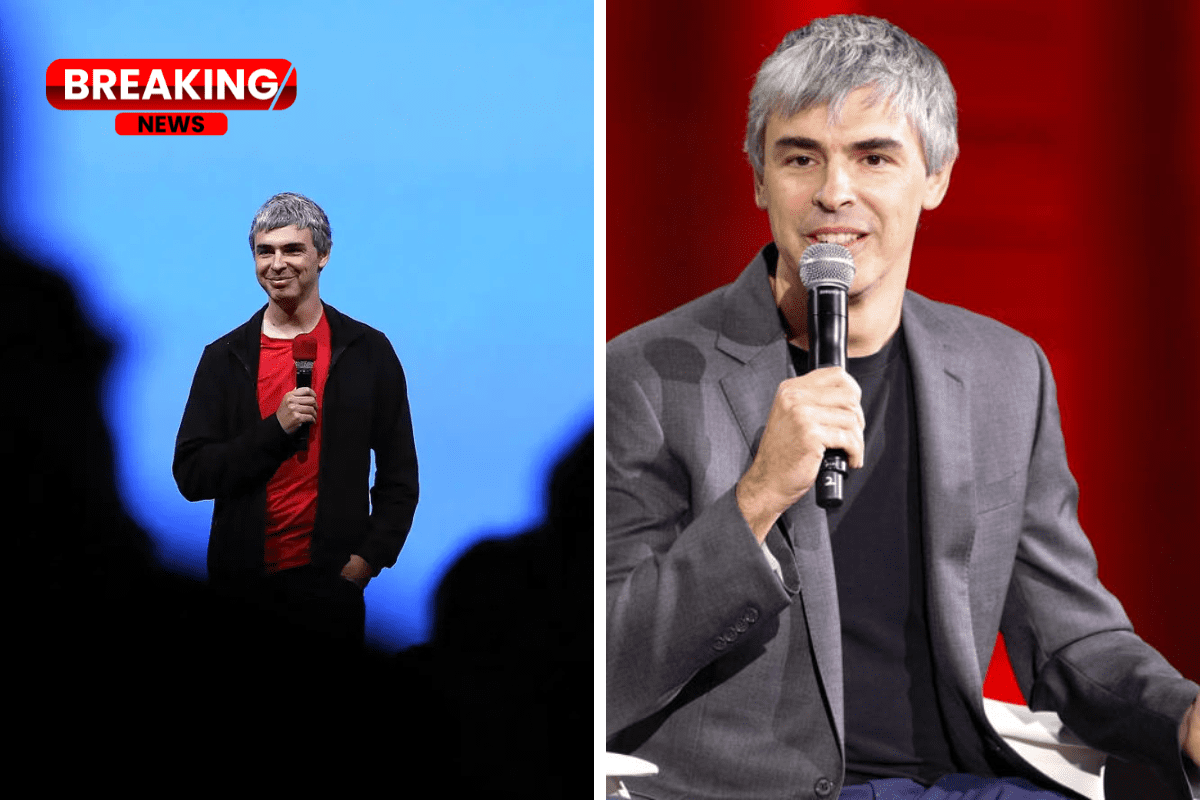
As 2025 quietly closed, the Google cofounder took a series of deliberate steps to unwind California’s legal and financial grip on his empire, converting key entities tied to his wealth and investments out of the state and into Delaware. The moves, first reported by Business Insider, come as California inches closer to putting a first-of-its-kind billionaire wealth tax in front of voters.
For Page, whose net worth places him near the very top of the Bloomberg Billionaires Index, the timing is anything but accidental.
The deadline that mattered

According to filings reviewed by Business Insider, Page met an end-of-2025 deadline to restructure assets that could expose him to California’s proposed wealth tax. The most notable change: his family office, Koop, was converted out of California in late December and reincorporated in Delaware.
That’s not cosmetic. Under California law, residency and tax exposure aren’t just about where you sleep—they hinge on “substantial ties” to the state. Business entities, offices, and investment vehicles all factor into that calculus.
Alongside Koop, Page converted several other major entities to Delaware:

Flu Lab LLC, which funds influenza research and lists its principal office in Nevada
One Aero, tied to Page’s flying car and advanced aviation ventures, with a principal address in Florida
Each conversion chips away at California’s ability to argue that Page’s financial life is still rooted there.
Dynatomics moves on paper, not in practice
One of the more intriguing filings involves Dynatomics, LLC, Page’s AI-driven aircraft manufacturing startup launched in 2023. Dynatomics was converted from California to Delaware, with a new principal address listed in Keller, Texas.

Yet according to a source close to Page, the operational reality hasn’t changed much. The Dynatomics team, led by former Kitty Hawk CEO Chris Anderson, continues to work out of California.
That distinction matters. It highlights how billionaire tax planning often works: operational presence can stay put, while legal domicile shifts to reduce exposure.
Anderson and representatives for Page’s family office declined to comment.
Why Delaware—and why now?
Delaware isn’t just popular. It’s the default setting for America’s corporate elite.
The state offers a business-friendly tax structure, a Court of Chancery that specializes in corporate disputes, and privacy rules that don’t require LLCs to publicly disclose directors’ names or addresses. For someone like Page—whose family office is famously opaque and tightly managed by CEO Wayne Osborne—that discretion isn’t a perk. It’s a feature.
California filings tied to the conversions were signed by Cristina Rosado, an attorney who manages many of Page and his wife Lucinda Southworth’s assets.
Official incorporation rules and disclosure requirements for Delaware entities are outlined by the Delaware Division of Corporations at https://corp.delaware.gov.
Islands, conservation, and a broader unwind
The restructuring goes well beyond tech startups.
Page also converted an LLC previously used to purchase islands in Puerto Rico and the U.S. Virgin Islands from California to Delaware, listing a new Florida address. Another entity tied to the purchase of an island in Fiji followed the same path.
Even philanthropy wasn’t spared. Oceankind, a marine conservation charity founded by Page’s wife Lucinda Southworth, converted out of California to Delaware in December.
In other words, this wasn’t a single defensive move. It was a coordinated unwind.
The tax proposal driving the exit
The backdrop to all of this is California’s proposed billionaire wealth tax, which could appear on the ballot this November. If approved, the measure would impose a 5% annual tax on assets held by residents worth more than $1 billion.
The kicker—and the detail that has rattled the ultra-wealthy—is its retroactive trigger. The tax would apply to anyone considered a California resident as of January 1, 2026.
Residency determinations are fact-intensive, weighing time spent in the state, location of family, and—critically—the presence of substantial business interests. The rules are spelled out by the California Franchise Tax Board at https://www.ftb.ca.gov.
The New York Times reported in December that Page had told associates he was considering a move to Florida because of the proposal. A source close to Page now says he has already left California, though it’s unclear whether the move is permanent.
California’s innovation economy on edge
Page isn’t alone in his concerns, and the pushback has been unusually blunt.
Venture capitalist Vinod Khosla warned on X that the measure would drive out California’s most important taxpayers, leaving the state “net off much worse.” San Jose Mayor Matt Mahan, a Democrat, called it “a political plan that will sink California’s innovation economy.”
David Sacks, the White House’s AI czar, has gone further, arguing the tax will accelerate the shift of tech and finance power to cities like Austin and Miami. His firm, Craft Ventures, recently opened an office in Austin.
Even outside Silicon Valley, alarm bells are ringing. Celebrity attorney Alex Spiro sent a letter to Governor Gavin Newsom last month warning that the proposal could trigger “an exodus of capital and innovation from California.”
What Larry Page’s move really signals
Larry Page hasn’t testified before a committee or financed an opposition campaign—at least not publicly. But his actions speak in the language billionaires understand best: jurisdiction.
By converting entities, shifting addresses, and severing legal ties before the calendar flipped, Page appears to be positioning himself beyond California’s reach if the wealth tax becomes law.
Whether the tax passes or not, the message is already out there. When policy uncertainty rises, capital doesn’t argue—it relocates.
FAQs
Q. Did Larry Page officially move out of California?
A source close to Page said he has already left the state, though it’s unclear whether the move is permanent.
Q. Why did Page convert entities to Delaware?
Delaware offers favorable tax rules, stronger privacy protections, and a specialized corporate court system.
Q. What is California’s proposed billionaire tax?
A ballot measure that would impose a 5% annual tax on assets over $1 billion for California residents.
Q. Would the tax apply retroactively?
Yes. If passed, it would apply to anyone deemed a California resident as of January 1, 2026.
Q. Are other tech leaders opposing the proposal?
Yes. Venture capitalists, tech executives, and political leaders have publicly criticized the measure.